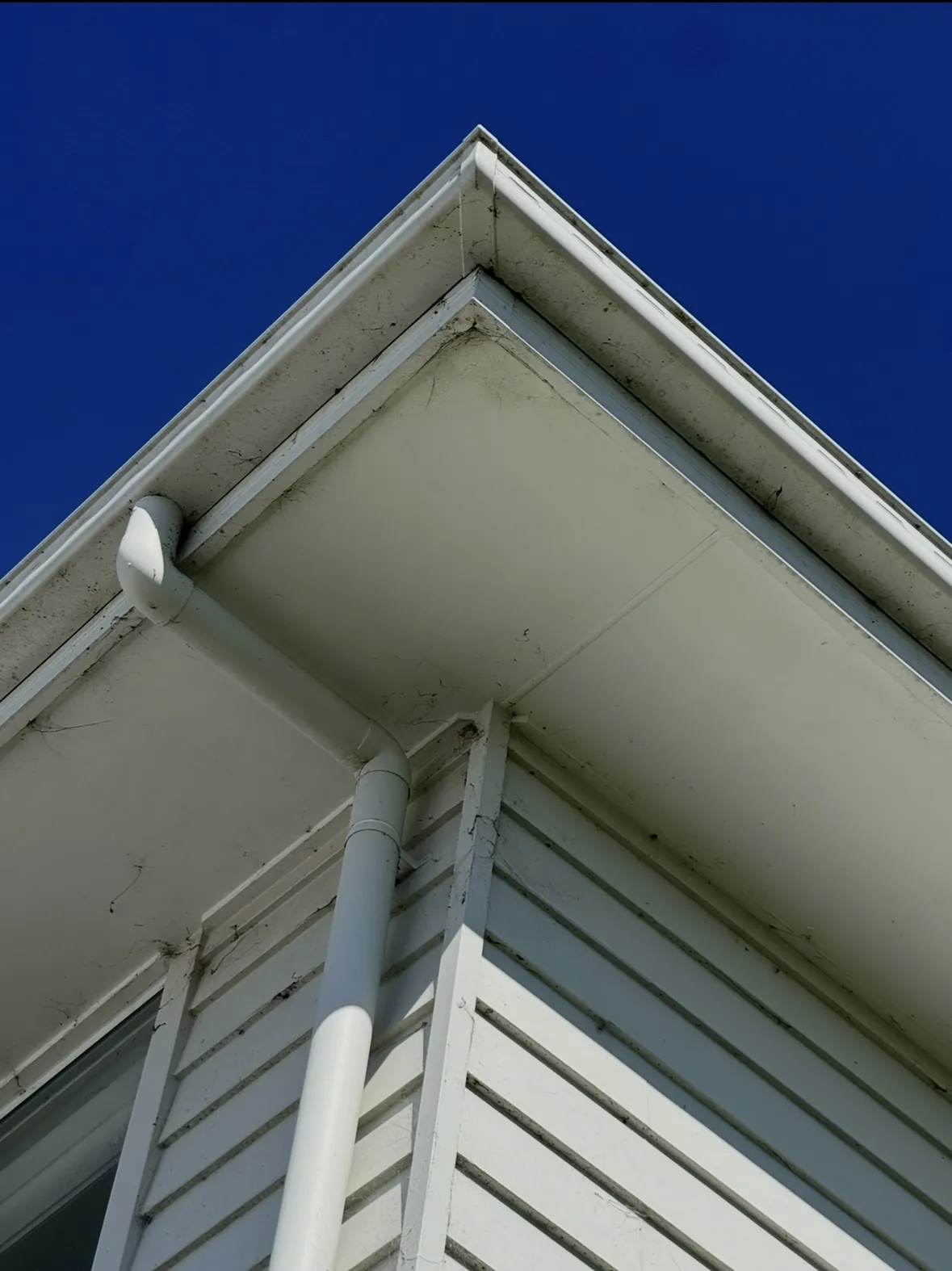
Most Newcastle gutters need clearing twice a year. The schedule shifts if you have trees overhanging the roof — eucalyptus and melaleuca drop material continuously, not just in autumn, and the gutters of a house with gum trees directly above can block within three months of a clear.
The cost of neglect is not dramatic in the short term, which is why most homeowners leave it. But the failure mode when blocked gutters overflow consistently is not glamorous: fascia rot, water behind the wall cladding, and — on older homes with shallow footings — moisture migrating toward the slab edge. None of that is cheap to fix.
Why Newcastle's tree cover makes timing harder
Most Australian cities have some version of the "clean gutters in autumn" advice. In Newcastle it is more complicated.
The Hunter region's urban tree cover skews toward eucalypts and melaleucas — species that drop bark strips, seed pods, and leaves year-round, not seasonally. A clear gutter in September can be half-blocked by December with no autumn leaf fall involved at all. If you have a large gum with branches over your roofline, a six-monthly schedule is not enough.
The tell is how quickly the blockage returns. If you clear your gutters and they are blocked again within three months, you have overhanging trees that need a seasonal schedule, not an annual one.
What blocked gutters actually do to a house
When a gutter blocks, water backs up until it overflows. The overflow has two paths: off the front face of the gutter (visible from the ground as a waterfall during rain) or behind the gutter into the fascia board and roof space.
The visible overflow is the less damaging outcome. It is annoying and it tells you the gutter needs clearing, but the water goes onto the ground and drains away.
The less visible overflow — behind the fascia — is where the long-term damage happens:
- Fascia rot: The fascia board is typically timber, painted or coated but not waterproof. Consistent moisture behind it causes the wood to soften and eventually rot. Fascia replacement is not an enormous job but it is avoidable.
- Soffit staining and damage: Water tracking down behind the fascia stains the soffit below and, in older homes with timber soffits, can cause rot in that material too.
- Wall cavity ingress: On brick veneer homes with older flashing, water that runs behind the fascia can find its way into the cavity behind the cladding. This is where the cost gets serious — cavity drying and remediation is not a cheap job.
- Foundation moisture: This is less common but happens on older homes where the overflow consistently runs toward the house rather than away from it. Prolonged moisture near footings causes movement on reactive clay soils.
None of this happens from one blocked gutter in one rainstorm. It is the cumulative effect of consistent overflow over months or years that creates the problem.
The gum tree calculation
If your roof has one or more eucalyptus or melaleuca trees with branches directly above, you are in a different category from the standard twice-a-year advice.
These species shed continuously. Bark strips and seed pods accumulate in gutters between rains and then, when rain comes, wet and compact into a mat that blocks the downpipe outlet. The mat does not dry out and lift — it stays wet, compacts further, and eventually you have a dam rather than a gutter.
The practical answer for most Newcastle homes with overhanging gums is three-monthly clearing, or installation of a leaf guard system. Leaf guards work well on roofs with a consistent leaf type. They do not handle the bark strips and seed pods from eucalypts as well — the debris can sit on top of the guard and still block the flow. Worth discussing with whoever installs them whether they are suited to your specific tree type.
Signs your gutters need clearing now
- Water spilling over the front of the gutter during rain (the visible overflow)
- Staining on the fascia or soffit below the gutter line
- Sagging sections of gutter where compacted debris has added weight
- Plants growing in the gutter (a gutter with enough debris to support plant growth is well overdue)
If you see moss or small seedlings established in the gutter, that is not a new problem — that requires months of consistently moist organic material. You are looking at a gutter that has not been cleared in a long time and probably has downpipe blockages too.
What a professional gutter clean includes
We remove all debris by hand — not just blowing it out with a leaf blower, which moves loose material but redistributes compacted sediment rather than clearing it. Every downpipe is checked and cleared by hand and then flushed with water to confirm flow. We send a photo report on completion.
We also document anything we find during the clean that indicates a bigger problem: fascia damage, signs of water ingress, downpipes disconnected from the stormwater system. You get a photo of those conditions and a straight explanation of what they mean.
For a quote on gutter clearing in Newcastle and surrounding suburbs, call 0405 371 116 or contact us online.
See also: our gutter cleaning service page for full details, and our notes on how often to pressure wash your driveway for a related maintenance question.
Frequently Asked Questions
How often should I clean my gutters in Newcastle?
Twice a year is the standard — once after autumn leaf fall and once after spring. If you have eucalyptus or melaleuca trees overhanging your roof, every three months is more appropriate because those species drop bark and seed pods year-round, not just in autumn.
What damage can blocked gutters cause?
Blocked gutters overflow rather than drain. Overflow goes behind the fascia board, into the wall cavity, and in some cases into the ceiling space. Over time it causes fascia rot, soffit staining, and in severe cases, water ingress into the wall framing. On older homes it can also undermine footings if the overflow runs consistently toward the house.
Can I clean my own gutters?
On a single-storey property with safe roof access, a leaf blower from a ladder clears loose debris. Compacted sediment — the wet, heavy material at the bottom of a long-neglected gutter — needs hand removal. On two-storey homes, roof safety is the bigger concern. If you are not comfortable on a roof, the risk is not worth the saving.
What is included in a professional gutter clean?
We remove all debris by hand, clear every downpipe by hand and then flush with water to confirm clear flow, and send a photo report on completion. We also document any fascia damage or signs of water ingress we find during the job.