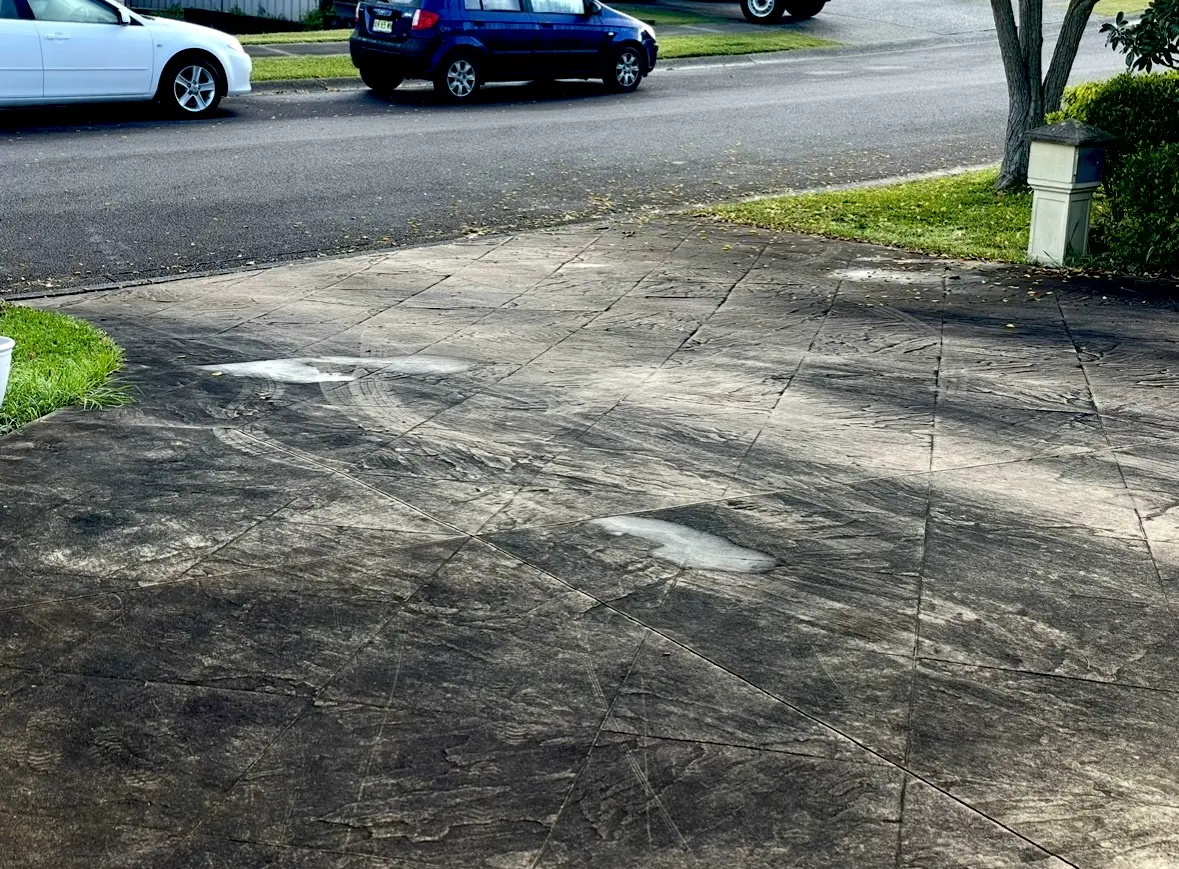
The number on the side of a pressure washer is PSI — pounds per square inch. It is the most advertised figure and also the most misunderstood. PSI tells you how concentrated the pressure is. It does not tell you how much material the machine can shift per minute. That is determined by flow rate, and most consumer machines fall short on both counts for a concrete driveway.
Cleaning units — PSI multiplied by flow rate in litres per minute — is the figure that actually predicts cleaning performance. A machine producing 2500 PSI at 11 L/min has the same cleaning units as one producing 1250 PSI at 23 L/min. For driveways with compacted staining, the higher-PSI option is more effective. For large flat areas with loose material, higher flow clears faster. For most residential driveways in Newcastle, you need both.

What PSI means for driveway cleaning
A concrete driveway requires 2500–3500 PSI to clean effectively. That range handles compacted soil, algae, tyre rubber transfer, and light staining. Below 2000 PSI — where most consumer pressure washers operate — you are wetting the surface and moving loose material, but the embedded staining stays.
Exposed aggregate is slightly more forgiving. 2000–2500 PSI at the right distance is enough because the aggregate surface is more abrasive than smooth concrete and helps break up deposits.
Sandstone and terracotta pavers need lower pressure — typically 1500–2000 PSI — because the surface is softer. Higher pressure risks pitting and grout damage. On pavers with existing grout failure or loose sand joints, pressure washing of any kind will accelerate what the weather has already started. We will tell you if that is your situation before we start the machine.
Flow rate: the number most people ignore
PSI is force. Flow rate — measured in litres per minute (L/min) — is volume. You need both.
A consumer pressure washer running 1800 PSI at 6 L/min will take significantly longer to clean a 60m² driveway than professional equipment running 2800 PSI at 14 L/min. The professional machine delivers more than four times the cleaning output per pass. That translates to a 45-minute professional clean versus a two-hour DIY session on the same driveway.
Higher flow rate also improves flushing — getting dislodged material off the surface and into the drain. At low flow, loosened algae and soil can be redistributed rather than removed. You end up spreading the staining instead of clearing it.

Hot water vs cold water for driveways
Cold water removes algae, moss, and general soil effectively. Hot water is required for oil and grease.
The chemistry is straightforward: oil does not dissolve in cold water regardless of pressure. Heat breaks down the hydrocarbon bonds in motor oil and allows the emulsifying detergent to carry it away. For a driveway with oil staining — from a leaking car or a regularly parked work vehicle — cold water with a biodegradable pre-treatment degreaser is the minimum. Hot water equipment is more effective and reduces the number of passes needed.
Most residential pressure washing in Newcastle is done with cold water and pre-treatment chemical. For oil stains sitting for more than twelve months, hot water equipment makes a meaningful difference in the result. If oil is your main problem, ask specifically whether the operator runs hot water equipment — many do not.
How much water does pressure washing a driveway use
A standard 60m² concrete driveway clean uses approximately 400–700 litres of water. The range depends on equipment flow rate, surface condition, and whether pre-treatment requires additional rinsing time.
That figure is lower than most people expect. A garden hose running at full open uses 12–20 litres per minute. Scrubbing the same driveway with a brush and hose for 40 minutes uses more water than a professional pressure wash — and achieves a fraction of the result.
Professional machines run higher pressure with controlled flow rather than flooding the surface. The water efficiency — material removed per litre used — is better than any DIY alternative on stained concrete.

Water restrictions and driveway washing in Newcastle
Hunter Water manages water supply and restrictions for the Newcastle and Hunter region. Pressure washing a driveway falls under outdoor water use rules.
Under permanent water saving measures, hosing hard surfaces — paths and driveways — with an open hose is restricted. Pressure cleaning equipment with a trigger gun satisfies this requirement in most cases, as water only flows when the gun is active. Check the current Hunter Water restrictions before booking during low-dam-level periods when conditions can change quickly.
Commercial operators using recirculated water systems are generally exempt from residential use restrictions. If water conservation matters on your property, ask whether the operator uses water recovery equipment.
Nozzle selection and water delivery
The nozzle changes how water pressure is delivered at the surface. Getting it wrong wastes both water and time.
A zero-degree nozzle concentrates pressure to a single point. It is used for removing paint or rust from metal. It will gouge concrete and is never appropriate for a driveway.
A 15-degree nozzle is narrow enough for targeted stain work — persistent oil marks or corner deposits. Effective when moving. Damaging when held still.
A 25-degree nozzle is the standard for concrete driveways. It distributes pressure over a wider arc, cleans efficiently, and causes no surface damage at correct working distances.
A rotary or turbo nozzle spins a zero-degree stream in a circular pattern, covering the area of a 25-degree with the concentration of a zero-degree. Effective for heavy staining on concrete, too aggressive for softer surfaces and pavers.
How much does a driveway pressure wash cost in Newcastle
A standard residential driveway pressure wash in Newcastle costs $299–$599. That covers a single driveway in average condition. Factors that push the price up:
- Heavy oil staining requiring degreaser pre-treatment and additional passes
- Exposed aggregate or mixed-surface driveways needing careful nozzle selection
- Two-vehicle or oversized driveways
- Pavers with problem areas requiring lower pressure and longer dwell time
We quote per job before we start, so there are no surprises. Call 0405 371 116 or contact us online — we respond within 2 hours during business hours.
For guidance on how often your driveway needs cleaning, see our driveway pressure washing frequency guide. For a full list of what is included in a standard residential clean, see our pressure washing service page.
Frequently Asked Questions
What PSI do I need to pressure wash a driveway?
Concrete driveways need 2500–3500 PSI for effective cleaning. Consumer pressure washers typically run 1400–2000 PSI — enough for light soil but not for staining, algae, or compacted grime. Exposed aggregate handles 2000–2500 PSI. Softer surfaces like sandstone pavers need 1500–2000 PSI to avoid surface damage.
How much water does pressure washing a driveway use?
A standard 60m² driveway clean uses approximately 400–700 litres. This is typically less than using a garden hose and brush over the same area — and achieves a better result. Professional equipment uses higher pressure with controlled flow, making it more water-efficient than most DIY methods.
Does hot water pressure washing work better on driveways?
For general soil, algae, and moss, cold water pressure washing is effective. For oil and grease stains, hot water makes a significant difference — heat breaks down the hydrocarbon bonds that cold water cannot. If your driveway has oil staining, ask specifically whether the operator uses hot water equipment.
How much does a driveway pressure wash cost in Newcastle?
A standard driveway pressure wash costs $299–$599 in Newcastle depending on size and condition. Heavily stained or oversized driveways sit at the top of that range. Call 0405 371 116 for a specific quote — we respond within 2 hours during business hours.
Can I pressure wash my driveway under water restrictions?
In most cases, yes. Pressure washing equipment with a trigger gun satisfies Hunter Water's permanent water saving rules, which restrict open hosing of hard surfaces. Check the current Hunter Water restrictions for the most up-to-date conditions before you start.