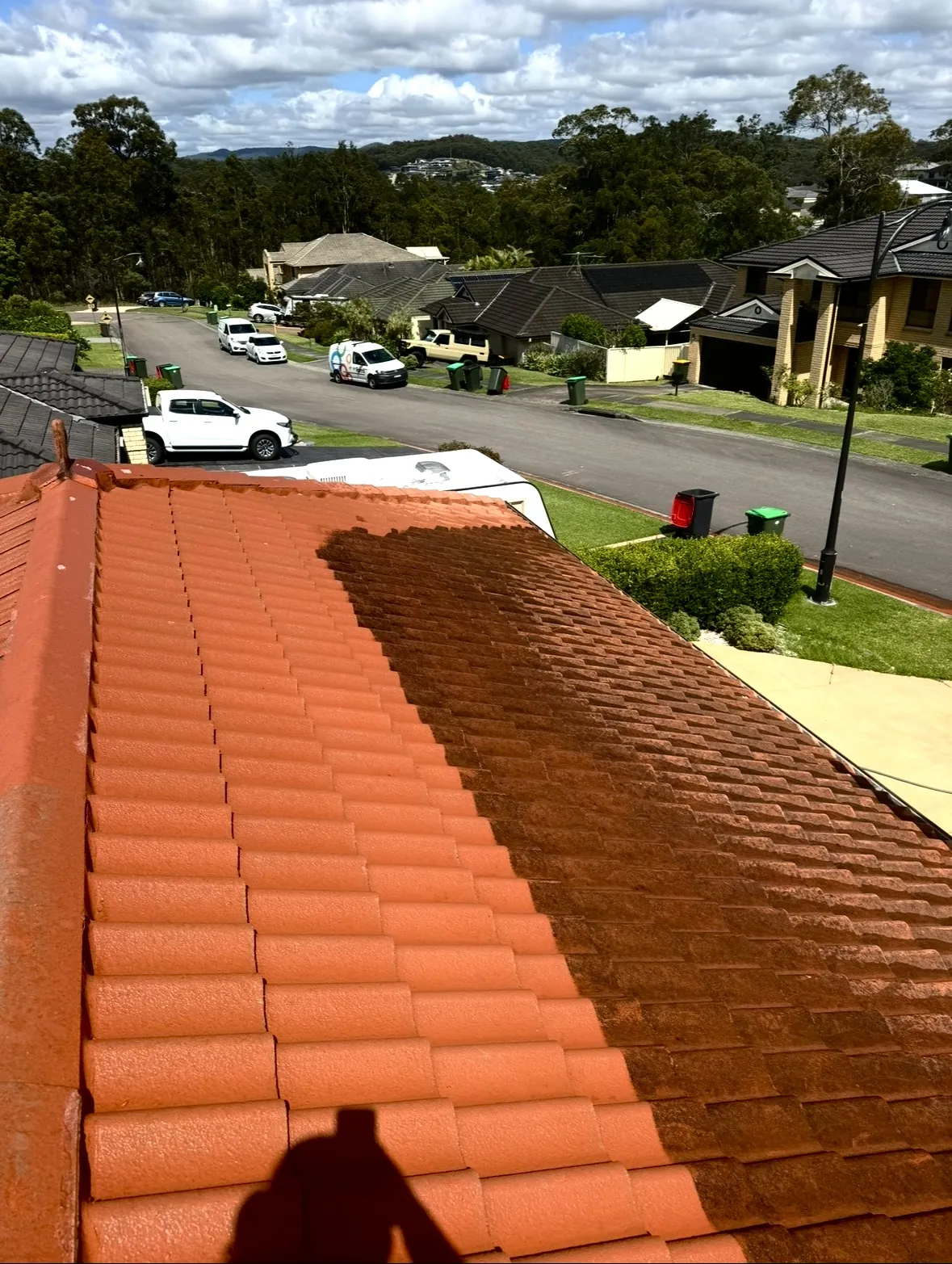
Pressure washing and soft washing are not interchangeable. They solve different problems and suit different surfaces. Using the wrong method will either damage the surface or leave you paying again in six months.
How pressure washing works
A pressure washer forces water through a nozzle at high speed — typically 2000–4000 PSI for professional equipment. The force is what cleans. It blasts off soil, algae, and loose coatings mechanically.
This works well on:
- Concrete driveways and paths
- Brick walls and paving
- Pool surrounds
- Commercial hard standings
It does not work well on — and can destroy:
- Roof tiles (strips protective granules, forces water under tiles)
- Painted weatherboards (strips paint)
- Render (cracks and holes)
- Treated timber decking (raises the grain, leaves it rough)
How soft washing works
Soft washing applies a biodegradable chemical solution at low pressure (roughly the same as a garden hose). The chemicals — typically a sodium hypochlorite base with surfactants — do the cleaning. The rinse at the end just washes the dead material away.
This is the correct method for:
- Roof tiles and metal roofing
- Painted or rendered walls
- Timber decking and fences
- Any surface where high pressure would cause damage
The key advantage: soft washing kills the biology at the root. Pressure washing removes what is visible. A soft-washed roof stays cleaner for two to three years longer because the mould and lichen spores are dead — not just dislodged and ready to regrow.
Which one do you need?
If you are cleaning a hard surface with no paint or fragile coating: pressure washing.
If you are cleaning a roof, painted exterior, render, or any surface where you are unsure: soft washing.
If a cleaner quotes you pressure washing for a roof without mentioning soft wash, ask why. The answer will tell you whether they know what they are doing.
Frequently Asked Questions
Soft Washing vs Pressure Washing: What Is the Difference?
Pressure washing uses force. Soft washing uses chemistry. Use the wrong one and you will damage your roof, strip your paint, or waste your money.