Yes, cleaning solar panels improves output. The more honest question is: by how much, and is it worth the cost on your specific installation?
The answer depends on where you live, the age of the panels, and what is on them.
What actually reduces panel output
A solar panel works by allowing light to hit the photovoltaic cells through a glass cover. Anything on that glass that blocks or diffuses the light reduces the amount of power generated.
The main contaminants on Newcastle panels:
- Bird droppings: The most damaging in terms of output because they create dense, opaque spots directly over cells. A single dropping over a cell can reduce output from that cell to near zero, and on some panel configurations, this affects the entire string.
- Salt film: On coastal properties within 1–2km of the ocean, salt from sea spray deposits on the glass and creates a hazy film. It reduces output more gradually than bird droppings but covers more surface area.
- Dust and pollen: The least damaging in isolation. Builds up on flat-mounted panels faster than on steeply pitched ones. Rain clears loose dust from steep panels; flat-mounted panels accumulate it.
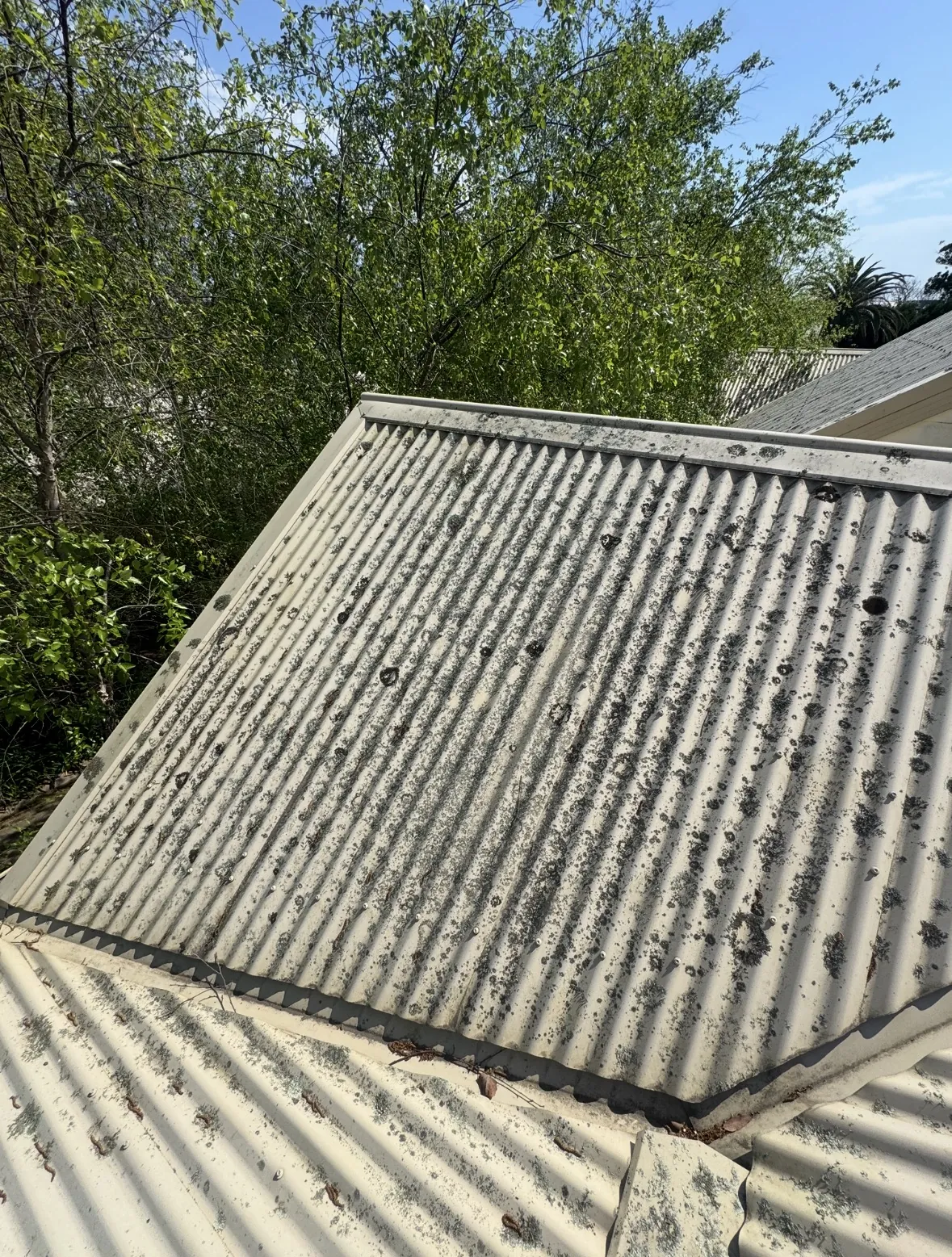
- Lichen: On panels that have not been cleaned in years, lichen can establish on the glass surface. This is slow to develop but difficult to remove without specialist treatment.
What the research says
CSIRO research puts soiling-related output loss at 15–25% for moderately soiled panels. Heavily soiled installations in dusty or coastal environments can exceed 25%.
The figure varies with panel angle. Panels at 10–15 degrees (common on low-pitch roofs) self-clean poorly in rain and accumulate more contamination than panels at 30 degrees or more. If your roof is low-pitched and you are near the coast, you are at the higher end of that range.
Bird droppings are the outlier. A small number of droppings over critical cell areas can cause disproportionate output loss — more than the area covered would suggest — because of how some panel configurations handle cell shading. If you have birds regularly landing on or near your panels, the output impact is worth monitoring through your inverter data.
When cleaning is clearly worth it
If your inverter data shows a consistent downward trend that is not explained by seasonal variation or shading, soiling is likely. A single clean and comparison of before-and-after output gives you a clear answer.
For Newcastle coastal properties — Merewether, Belmont, and suburbs within a few kilometres of the water — the case for annual cleaning is strong. Salt film builds faster, output loss accumulates faster, and the cost of the clean is justified by the power recovered over the following year.
For inland properties without bird problems and on steeper roof pitches, the case is weaker. Rain does most of the work and an annual clean is appropriate rather than necessary.
When cleaning is not worth it
If your panels are under manufacturer warranty and your installer has recommended against cleaning, check the warranty conditions before booking anyone.
If your panels are more than 15 years old and showing visible degradation of the glass surface, cleaning may not recover output meaningfully. Degraded cells underperform regardless of surface cleanliness.
How we clean panels
Purified water through a soft brush, rinsed and squeegeed dry. No detergents that leave residue. No pressure washing — the jet pressure from a standard pressure washer is too high for panel glass, particularly on older installations where the anti-reflective coating may be worn.
We do not walk on panels. We work from the roof surface beside the array or from a water-fed pole from below, depending on access.
Before-and-after output data is available from your inverter app if you want to document the improvement — we can time the clean for a day when conditions will be consistent before and after.
For a solar panel cleaning quote in Newcastle and surrounding suburbs, call 0405 371 116 or contact us online. See our solar panel cleaning service page for full service details.
Frequently Asked Questions
How much output do dirty solar panels lose?
Research from CSIRO and independent testing puts the loss from soiled panels at 15–25% under moderate soiling conditions. The actual loss on any specific installation depends on panel angle, local dust load, whether bird droppings are present, and proximity to the coast. A panel at a shallow tilt in a coastal suburb can lose more than 25% because it does not self-clean in rain as effectively as a steeply pitched panel.
Do solar panels clean themselves in rain?
Partially. Rain clears loose dust from steeply pitched panels reasonably well. It does not remove bird droppings, lichen, salt deposits, or compacted dust. It also does not clean flat-mounted panels effectively — on shallow tilts, water pools and leaves mineral deposits as it dries. If you notice a persistent output drop after rainy periods, you have contamination that rain is not shifting.
How often should I clean solar panels in Newcastle?
Once a year is appropriate for most Newcastle properties. Twice a year for coastal suburbs like Merewether, Belmont, or properties near Lake Macquarie where salt deposit builds up faster. If you have birds nesting nearby or a large tree dropping debris onto the panels, check output monthly and clean when you see a sustained drop.
Is it safe to clean panels yourself?
The cleaning itself is safe — purified water and a soft brush. The hazard is roof access. If your panels are on a two-storey roof or a steep pitch, roof safety is the issue, not the cleaning method. Consumer pressure washers are also too high-pressure for panels — the jet can crack the glass coating on older installations.