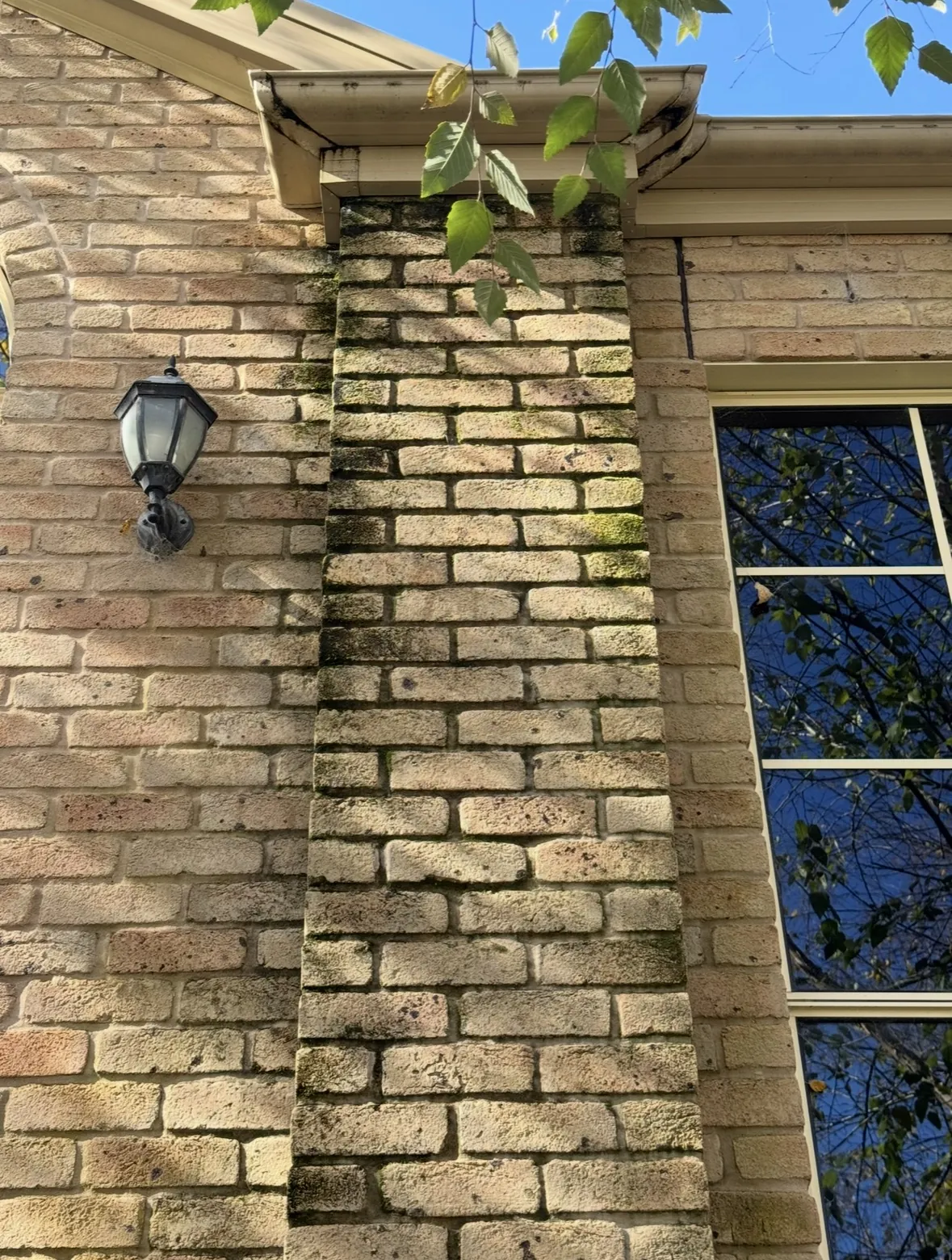
Salt air does not cause mould directly. But it creates the conditions mould needs to grow faster than it would on an identical property a few kilometres inland.
Here is the mechanism, and what it means for maintenance.
What salt air actually does to a surface
When sea spray evaporates, the salt stays behind. On external walls, render, and roof tiles within range of onshore wind, this creates a thin layer of salt deposit on every surface that faces the water.
Salt is hygroscopic — it draws moisture from the air and holds it. A surface with salt deposits stays slightly damp even when it looks dry. It does not need rain. The ambient humidity from the ocean is enough.
Mould needs moisture, a surface to colonise, and time. Salt deposits provide the moisture and accelerate the colonisation. That is why homes within 500m of Merewether Beach, Dixon Park Beach, or the waterfront suburbs around Lake Macquarie develop mould growth on render and weatherboard within months of a clean, whereas the same surface on a home in Lambton might stay clean for two or three years.
Which surfaces are most affected
Render holds salt deposits well because the surface is slightly porous and irregular at the microscopic level. The shaded faces — south and west elevations on most Newcastle homes — do not dry out during the day, which compounds the moisture problem.
Weatherboard is particularly vulnerable because painted timber surfaces develop hairline cracking over time, and salt deposits in those cracks are difficult to remove without causing further paint damage. A gentle house wash on weatherboard requires lower pressure and pre-treatment — not high-pressure water that will force salt deeper into the cracks.
Roof tiles on south-facing pitches close to the coast develop lichen and algae faster than inland roofs. The salt layer on the tiles provides an additional surface for organisms to grip.
Window glass develops visible salt haze from sea spray — the white film that builds up between rains. This is less about mould and more about mineral deposits from the evaporated water.
The case against doing nothing
The argument for leaving mould on a wall until it is severe is that it costs less in the short term. That is true. The argument against it:
Mould root systems penetrate into the surface material — render, timber, paint coating — and accelerate degradation. On painted surfaces, the root system works under the paint layer and causes blistering and peeling. On render, it can drive moisture into the substrate.
A house wash that removes mould before the root system is established costs significantly less than repainting or rerendering. The right interval for coastal homes is usually annual. Some properties within direct sea-spray range need a wash twice a year.
What we do differently for coastal properties
Pre-treatment is standard for every coastal job we do. We apply a biodegradable mould treatment to the affected surfaces and give it dwell time before the wash. The treatment kills the mould at the root, not just the visible surface growth. Without it, the colour comes back within weeks because the organism is still alive in the surface.
Pressure is lower on weatherboard and painted render than on concrete or masonry. Higher pressure on a painted surface near the coast is how paint blistering starts.
We also note what the surface condition is before we start. If the paint is already chalking or the render has significant cracks, we will tell you — a wash can cause more damage than good if the coating is compromised. On those properties, the decorator or renderer comes first.
For a house washing quote in Merewether, Belmont, or other coastal Newcastle suburbs, call 0405 371 116 or contact us online. See our house washing service page for full detail on what is included.
Frequently Asked Questions
Why does mould grow faster on homes near the beach?
Salt from sea spray deposits on render, weatherboard, and roof tiles and creates a hygroscopic layer — it draws moisture from the air and holds it against the surface. Mould does not need rain to grow if the surface stays slightly damp. That is why homes within 500m of the coast develop mould faster than identical properties a few kilometres inland.
Does salt air damage render or weatherboard directly?
Over time, yes. Salt deposits are mildly acidic and can degrade paint coatings and cause efflorescence (white salt crystals) on masonry. The mould growth on top of the salt deposit adds to the problem because the root system penetrates into the surface material.
How often should I wash my house if I live near the beach?
Annual is the minimum for most coastal homes. If you are within a few hundred metres of the water and on the prevailing sea-breeze side of your suburb, twice a year is more appropriate. The south and west faces — the ones that do not dry out in the afternoon sun — need more attention.
Does pressure washing remove salt deposits?
Yes, but you also need to kill the mould at the root, not just blast the visible growth off the surface. We pre-treat with a biodegradable mould treatment before the wash — that kills the organism, not just the discolouration. Without pre-treatment the mould returns within weeks.