Every year, the US Consumer Product Safety Commission logs roughly 6,057 emergency room visits from pressure washer injuries, and 14% of those need hospitalisation. In Australia, ladder falls (the way most people access roofs and gutters to clean them) kill more than 30 people a year and put over 6,200 in hospital. Neither number is about faulty equipment. Both are about surface, technique and height, handled the wrong way.
Our complete pressure washing guide and PSI guide by surface cover what pressure and PSI to use. This post covers the part most guides skip: what actually goes wrong, on which surface, and what a professional does differently to avoid it.
How Common Are Pressure Washing Injuries, Really?
Lacerations are the single most common pressure washer injury, ahead of bruises, punctures and eye injuries, per Consumer Reports' analysis of CPSC data. What makes them worse than an ordinary cut is the mechanism: a jet running at 2,000-4,000 PSI does not just cut skin, it can inject water, dirt and bacteria deep into the tissue through a wound that looks minor from the outside.
Dr. Howard Mell of the American College of Emergency Physicians has described exactly this pattern in patients: a laceration under two inches across on the calf that looked like a routine cut led to a deep muscle infection requiring surgery and months of physiotherapy. The wound size on the skin has almost no relationship to the damage underneath it. This is the reason we never let a trigger gun near bare skin, even at low pressure, and why "it's only a graze" is the wrong instinct with this tool.
Driveways, Paths & Hard Surfaces: Kickback and Injection Injuries
Ground-level concrete and paving are the lowest-risk surfaces in this job, but they cause the most injuries simply because they are the surfaces homeowners clean themselves. The two real hazards here are kickback (the gun recoiling hard enough to throw the operator off balance on a wet, sloped, or uneven surface) and direct contact with hands or feet, which is how most of the CPSC's laceration cases happen.
The fix is procedural, not equipment-based: keep the nozzle moving, never point it at a foot, hand or another person, and never use a narrow "turbo" nozzle for anything other than a stubborn stain from a safe distance. Wet pavers and tiled areas also get slippery fast, and a slip while holding a live trigger gun is how a driveway job becomes a laceration case rather than a bruise.
Roofs, Gutters and Height Work: Where the Real Risk Sits
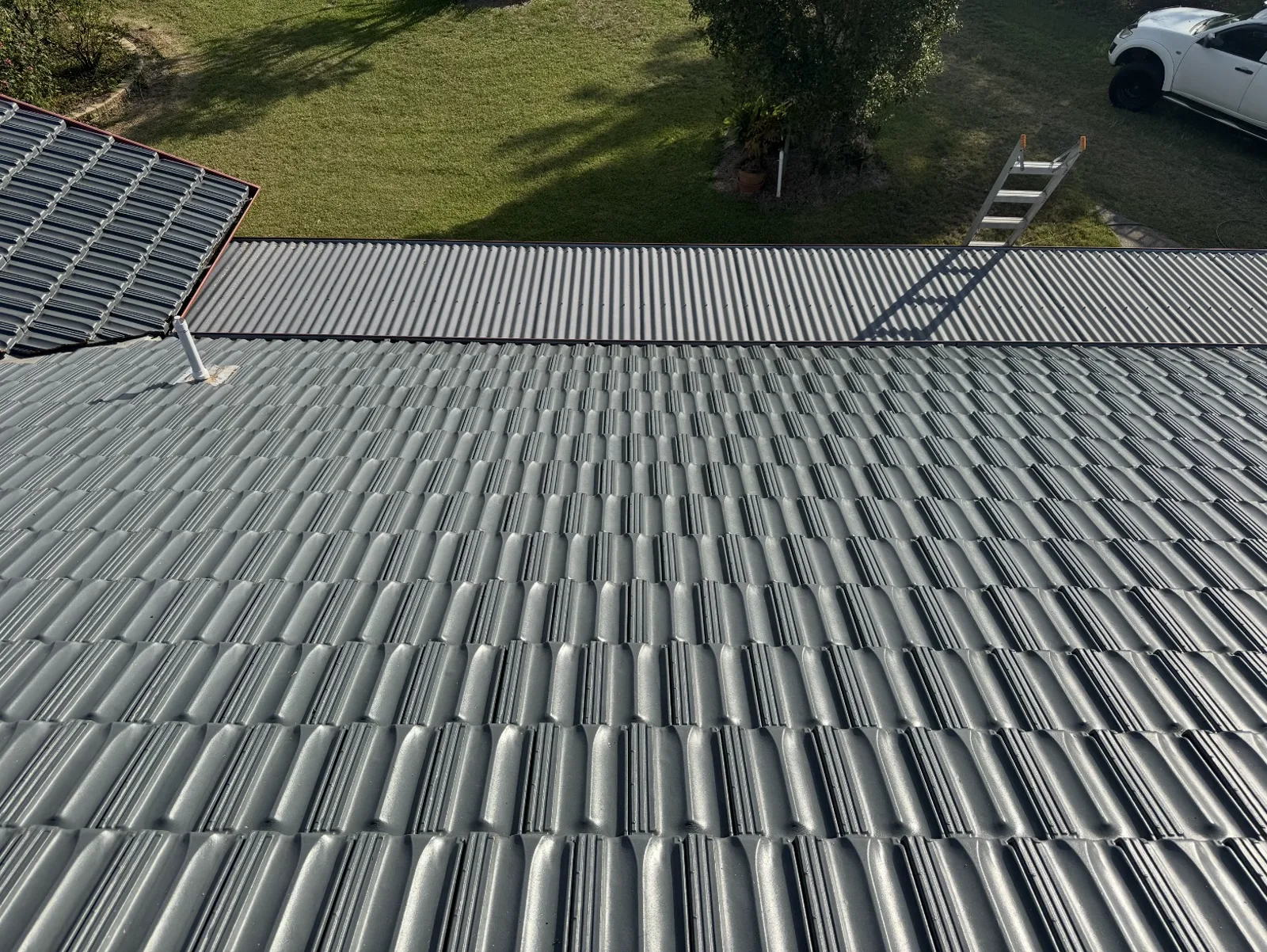
Pressure washing itself cannot happen on a roof, only soft washing can, but the height is the hazard regardless of which method is used. Ladder falls average more than 30 deaths a year in Australia, and ACCC Product Safety data shows over 6,200 hospitalisations in a recent 12-month period, with men at or nearing retirement age the highest-risk group by a wide margin.
This is why we treat any roof, gutter or second-storey job as a height-safety task first and a cleaning task second. That means harnesses, roof anchor points or elevated work platforms depending on the pitch and access, not a homeowner's extension ladder leant against a gutter on a Saturday morning. If a quote for roof or gutter work does not mention how the operator will be secured at height, that is worth asking about before booking.
Electrical Hazards: Water, Power Lines and GFCI Protection
Water and electricity share the job site on almost every clean, and Safe Work Australia's guide for managing risks from high-pressure water jetting lists electrical contact as a primary hazard alongside kickback and falls. Recent CPSC recalls of electric pressure washers with faulty shock protection make the same point from the equipment side: without a ground fault circuit interrupter (GFCI), an electric unit near wet ground is a real electrocution risk, not a theoretical one.
The practical rules are simple and almost always skipped by DIY operators: run electric units only on a GFCI-protected circuit, never point the jet at meter boxes, powerpoints or overhead wiring, and treat any job near a switchboard or power line as one that needs the power isolated first, not worked around.
Newcastle's Coastal Air Adds Its Own Risk Layer
Salt-laden coastal air does more than speed up algae growth, it corrodes the equipment doing the cleaning. Aluminium extension ladders stored near the coast corrode and weaken faster than the same ladder used inland, and a rung that looks solid can fail without warning. Metal roof fixings, gutter brackets, and outdoor power points corrode the same way, which is exactly why a visual check of ladder rungs, anchor points, and any exposed wiring matters more on a Merewether or Stockton job than it does twenty minutes inland.
None of the hazards above disappear on a calm, sunny Newcastle day. Salt exposure just shortens the gap between "this looked fine last time" and equipment failing when it matters.
Soft Wash Chemicals: The Hazard You Cannot See Coming
Soft washing swaps force for chemistry, usually a sodium hypochlorite-based solution, and that trade brings its own risk profile. The safety data sheet for sodium hypochlorite is explicit: it is corrosive to eyes and skin on contact and needs eye protection, gloves and adequate ventilation whenever it is being mixed or applied.
This matters because soft washing looks gentler than pressure washing, and homeowners who would never point a 3,000 PSI jet at their own face will happily spray an unlabelled bottle of DIY roof cleaner without goggles. The chemical carries the real risk here, not the pressure. Roofs, render and Colorbond fencing all need this method (see our soft washing vs pressure washing guide for which is which), and all three need the same PPE discipline as a high-pressure job, just for a different reason.
The PPE a Professional Actually Wears
Safe Work Australia's guide sets a clear minimum for anyone controlling a high-pressure jet: safety glasses or a full face shield, non-slip footwear, and gloves rated for the chemicals in use. Petrol-powered units add hearing protection to that list. None of this is optional gear reserved for industrial sites, it is the baseline for a residential driveway clean too.
The gap between this standard and what most DIY operators wear (thongs, no eye protection, shorts) is exactly where the CPSC's laceration and eye-injury numbers come from. Professional operators are not being cautious for the sake of it. They are working from the same injury data covered above.
When DIY Is Fine, and When It Is Not
A single ground-level driveway or path, cleaned in daylight with the right nozzle and closed footwear, is a reasonable DIY job for most homeowners. Everything else on this list changes the calculation:
- Any roof or gutter work, at any height, regardless of pitch
- Anything within reach of powerlines, meter boxes or a switchboard
- Any soft wash chemical mixing or application, without eye protection and ventilation
- Two-storey house washing, where both the fall risk and the water pressure needed to reach the top increase together
If a job fits any of those, the injury data above is the reason to call a professional rather than rent a machine for the weekend. It is also why asking a quote for proof of public liability insurance is a fair question, not an awkward one: an uninsured operator who falls, floods a wall cavity, or damages a fitting leaves the homeowner covering it.
Hazard Quick Reference by Surface
- Driveways, paths and paving: kickback and direct-contact lacerations — keep the nozzle moving, never point it at hands or feet
- Roofs and gutters: falls from height, the leading cause of serious injury on this list — harness or platform, never a leant ladder
- Render, weatherboard and Colorbond: soft wash chemical exposure — eye protection, gloves and ventilation, not just careful spraying
- Anything near powerlines, meter boxes or switchboards: electrocution — isolate power first, GFCI-protected units only
- Coastal properties (Merewether, Stockton, Newcastle East and similar): corroded ladder rungs, roof fixings and outdoor power points — visual check before every use, not just before the first
How We Manage These Risks on Every Job
We have cleaned more than 150 homes and commercial sites across Newcastle since starting three years ago, and every job runs to the same safety baseline: eye protection and non-slip footwear on every operator, GFCI-protected power on every electric unit, and harnesses or elevated platforms for anything at height rather than a leant ladder. Soft wash chemicals are mixed and applied by trained operators wearing the PPE the safety data sheet requires, not guessed at. We also carry full public liability insurance and provide a certificate of currency on request, so a job going wrong is never the homeowner's problem to fix.
For a fixed-price quote on pressure washing, roof cleaning or gutter cleaning done the safe way, call 0405 371 116 or contact us online. We respond within 2 hours during business hours.
Frequently Asked Questions
How common are pressure washer injuries?
The US Consumer Product Safety Commission recorded roughly 6,057 emergency room visits in a single year from pressure washer use, with 14% of those visits leading to hospitalisation. Lacerations are the most common injury, followed by bruises, punctures and eye injuries.
Can a pressure washer injury be more serious than it looks?
Yes. A high-pressure jet can inject water, dirt and bacteria deep under the skin through a break smaller than 2cm, well past what the wound looks like on the surface. Emergency physicians have documented cases where a small-looking laceration led to a deep tissue infection requiring surgery.
How dangerous is ladder work for gutter or roof cleaning?
More than 30 Australians die from ladder falls every year on average, and over 6,200 were hospitalised in a recent 12-month period, according to the ACCC. Roughly 4 in 5 of those hospitalised are men, and men at or nearing retirement age are the highest-risk group.
Is it safe to pressure wash near power lines or electrical fittings?
Not without turning the power off first. Safe Work Australia’s water jetting guidance treats electrical contact as a primary hazard alongside kickback and falls. Electric pressure washers should always run on a GFCI-protected circuit, and the jet should never be pointed at wiring, meter boxes or powerpoints.
Are soft wash chemicals dangerous?
The sodium hypochlorite solutions used in soft washing are corrosive to eyes and skin on contact, and the safety data sheet calls for eye protection, gloves and adequate ventilation. This is why soft washing needs the same PPE discipline as pressure washing, even though it uses no force.
What PPE does a professional pressure washer actually wear?
Safe Work Australia’s guide for high-pressure water jetting specifies safety glasses or a face shield as a minimum for anyone in control of the jet, plus non-slip footwear, gloves, and hearing protection on petrol units. Most DIY injuries happen with none of this on.
Should I pressure wash my own roof or gutters?
We would not recommend it. Roofs cannot be pressure washed at all, only soft washed, and the height itself is the real risk, not the chemical. Gutter and roof work is the single most common source of serious home-maintenance injuries in Australia, which is why we treat it as height-safety work, not a cleaning job.